Introduction
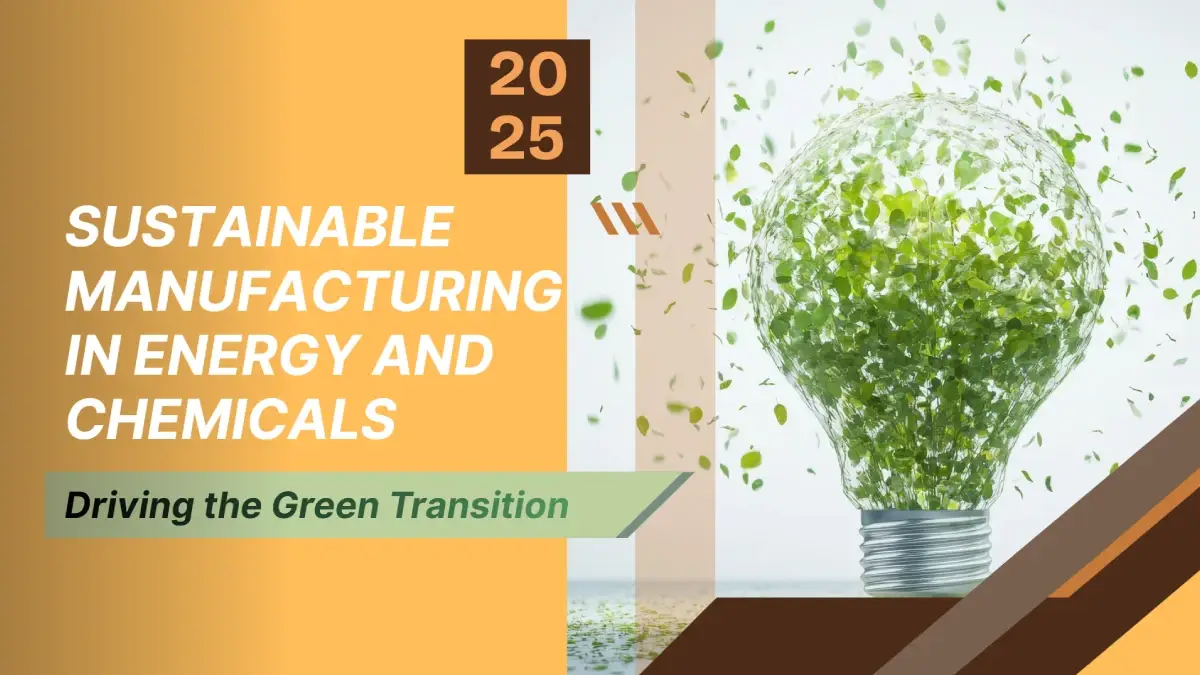
Sustainable manufacturing in energy and chemicals is no longer an option—it’s a necessity for businesses seeking long-term growth and environmental responsibility. As global regulations tighten and industries move toward net-zero targets, manufacturers are adopting innovative technologies, cleaner production methods, and circular economy principles to minimize their carbon footprint. The transformation is reshaping the way these sectors operate—driving efficiency, innovation, and competitiveness.
Why Sustainability Matters in Energy and Chemical Manufacturing
The energy and chemical industries are among the largest contributors to global carbon emissions, accounting for a major share of industrial pollution. By shifting to sustainable manufacturing, companies can significantly reduce greenhouse gas emissions, cut waste, and improve energy efficiency.
This approach not only helps the planet but also makes good business sense. Sustainable operations often lead to cost savings, stronger investor confidence, and better compliance with international environmental standards. In addition, customers and governments increasingly favor companies with transparent and responsible production practices.
Key Strategies for Sustainable Transformation
Transition to Renewable Energy Sources
Energy and chemical manufacturers are rapidly integrating renewable power sources—such as solar, wind, and bioenergy—into their operations. This transition reduces reliance on fossil fuels and helps companies achieve their sustainability targets faster. Facilities that use renewable power also benefit from reduced operational costs and long-term energy security.
Green Chemistry and Cleaner Production Methods
Green chemistry focuses on designing products and processes that minimize the use and generation of hazardous substances. Chemical manufacturers are using bio-based feedstocks, recyclable materials, and low-emission solvents to reduce environmental impact. These innovations ensure safety and sustainability across the product lifecycle—from raw materials to end-of-life management.
Circular Economy in Manufacturing
Circular economy models are gaining traction, encouraging the reuse, recycling, and recovery of materials. In the energy and chemical sectors, companies are finding ways to convert industrial waste into valuable byproducts, closing the loop and minimizing waste output. This approach also supports resource conservation and long-term profitability.
Role of Digital Technologies in Sustainability
Digital transformation plays a central role in enabling sustainable manufacturing. Tools like artificial intelligence (AI), Internet of Things (IoT), and advanced analytics are optimizing operations, predicting maintenance needs, and monitoring emissions in real-time.
AI-driven energy management systems, for instance, can adjust production processes dynamically to reduce energy waste. Similarly, digital twins—virtual models of physical plants—allow companies to simulate and improve sustainability performance before implementing real-world changes.
By combining data and automation, manufacturers can make faster, smarter, and greener decisions at every stage of production.
Challenges in Implementing Sustainable Manufacturing
Despite the clear benefits, implementing sustainable manufacturing in energy and chemicals comes with challenges. High capital costs, technology adaptation, and the complexity of retrofitting older facilities can slow progress. Additionally, smaller companies may lack access to funding or expertise for large-scale sustainability projects.
To overcome these hurdles, global collaborations, green financing, and supportive policy frameworks are essential. Governments and private investors are increasingly offering incentives for companies committed to sustainability goals—making it easier for businesses to adopt cleaner, smarter production systems.
The Road Ahead
The path toward sustainable manufacturing is a continuous journey. The future of the energy and chemical sectors will depend on how quickly industries can scale sustainable solutions and collaborate across the global supply chain.
Innovations in green hydrogen, carbon capture, and sustainable raw materials will redefine how energy and chemicals are produced and distributed. As these advancements mature, the industry will play a pivotal role in driving the world’s green transition.
Ultimately, sustainability will not just be an operational goal—it will become the foundation of industrial growth, competitiveness, and global impact.